Online gaming operators are rethinking the fundamentals. Tournaments, jackpots, and leaderboards still attract players. But running them as isolated promotions is no longer enough to build lasting loyalty. A sharper question is now shaping iGaming strategy: which mechanic belongs where in the player journey? The answer may redefine how operators chase growth for years ahead.
Why Single Mechanics Are Losing Their Edge
Tournament leaderboards remain one of the most visible tools in online casino gamification. They create urgency, competition, and measurable activity across platforms. But operators around the world are increasingly facing the same challenge: keeping leaderboard participation relevant well past the initial wave of excitement.
The issue is not that players stop caring about competition. The real problem begins when tournament formats grow too repetitive, too concentrated around the same high-spending player profiles, and too disconnected from realistic progression chances. Once rankings stop feeling achievable, the motivation to compete quietly disappears.
Repeated tournament campaigns often create top-heavy structures where dominant players dominate and casual players gradually stop showing up. For the broader player base, leaderboard participation begins to feel like someone else’s game.
A May 2026 industry analysis from Timeless Tech, an iGaming platform provider with a strong footprint in European and Latin American markets, put this challenge plainly. The regulated iGaming market is shifting toward retention-driven engagement strategies, with operators rethinking traditional leaderboard systems in favor of more dynamic and behavior-focused gamification models.
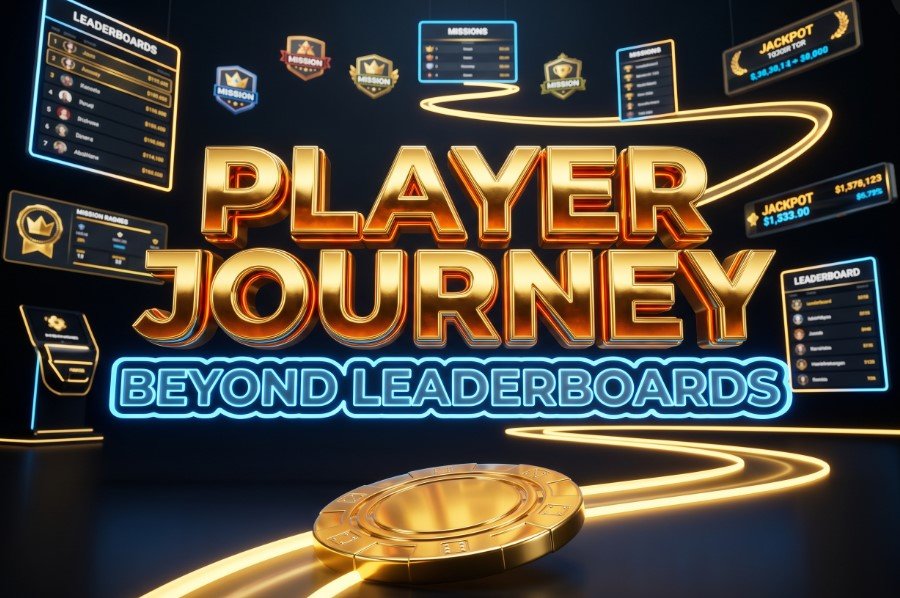
The Right Tool at the Right Stage
Tournaments, leaderboards, jackpots, and provider promotions have long been used across online gaming to support acquisition, engagement, retention, and reactivation all at once. The challenge is not the tools themselves. It is that asking one mechanic to carry every objective at once is where the strategy starts to break down.
Each mechanic has a distinct role. When placed correctly within the player lifecycle, these tools can work powerfully. When stacked against every possible goal, none of them performs as well as it could.
| Mechanic | Primary Purpose | Best Journey Stage |
|---|---|---|
| Tournaments | Drive competition and activity spikes | Engaged and active players |
| Leaderboards | Create urgency and social visibility | Active players in competitive mode |
| Races | Reward consistent session activity | Retention phase |
| Jackpot Networks | Boost game visibility and big-win appeal | Acquisition and engagement |
| Provider Promotions | Generate recurring engagement around new content | Engagement and reactivation |
Milan Čurin, Content Manager at Timeless Tech, has articulated where this thinking is heading. He points to the future of gamification lying in connecting individual mechanics into broader engagement ecosystems. Rather than running as separate campaigns, tools like tournaments and races can function as milestones within mission-based frameworks built specifically for progression and long-term retention.
Building an Ecosystem, Not Just a Campaign
This is the central shift happening right now. Forward-looking operators are no longer treating their promotions as a series of separate events. They are designing experiences where each mechanic connects cleanly to the next, building a clear path through the full player journey.
Consider a structured example. A player arrives on a platform. Daily missions guide early behavior and introduce game variety. Completing those missions unlocks access to a tournament. Placing well in the tournament advances the player to the next loyalty tier. That tier opens a jackpot eligibility window. Every interaction feeds the next one, turning isolated sessions into a continuous and rewarding story.
Challenges and missions add structure, variety, and a sense of personal purpose to what would otherwise be passive gameplay. Research from multiple 2026 trend reports highlights that progression systems and mission-based rewards are becoming standard across many casino platforms, and players are noticing. A 2026 iGaming industry report found that over 72 percent of players preferred platforms offering personalized recommendations and gamified reward systems over traditional interfaces.
Providers such as Pragmatic Play and 3 Oaks Gaming already demonstrate how overlays, timing, and promotional rhythm can sharpen game visibility. But operators increasingly need coordination layers capable of managing tournaments, races, jackpots, missions, and segmented mechanics as one connected system. The direction of iGaming gamification is clearly pointing toward multi-mechanic ecosystems rather than isolated promotional campaigns running side by side.
The Numbers That Back This Shift
The data is making the business case increasingly hard to ignore. Acquiring a new player now costs far more than it used to, with the average user acquisition cost across gaming rising to $29, a 60 percent jump from the historical average of $19. For high-value iGaming players, some operators are spending between $250 and $650 per depositing player.
As many as 55 percent of players leave iGaming platforms within their first year. The cost of continuously replacing churned players without solving the retention gap is not a marketing problem. It is a structural one that no bonus budget alone can fix.
Gamified platforms are showing a real edge here. Multiple industry studies confirm that gamified iGaming platforms retain up to 75 percent of players over six months, compared to roughly 50 percent on non-gamified platforms. That 25-percentage-point gap changes lifetime value calculations entirely, and it is increasingly the metric that separates profitable operators from those still running on unsustainable acquisition spend.
The global online gambling market is projected to reach $153.57 billion by 2030, growing at a compound annual growth rate of nearly 12 percent. iGaming alone generated $3.04 billion in Q1 2026 revenue in the United States, a 20.7 percent increase year-over-year. In a market growing that fast, the operators who build sustainable businesses will not be those offering the biggest prize pools. They will be those who create a connected journey that gives players a genuine and personal reason to return.
The iGaming industry is clearly at an inflection point, and the shift feels less like a new trend and more like a structural correction that has been building quietly for years. Players do not just want bigger prizes. They want a reason to keep coming back. Connecting the tools already available, tournaments, races, jackpots, and missions, into a structured player journey may be exactly how the industry closes the gap between short-term engagement spikes and the kind of loyal player base that drives real, lasting growth. What do you think? Are online gaming operators right to move beyond standalone promotions and start building full player journeys instead? Share your thoughts in the comments below.
Leave a Reply